Quiet Resistance: Pictorialism in Russian Photography
Quiet Resistance: Pictorialism in Russian Photography, June 10 - 30, 2008 at the Museum of Decorative Arts and Design, Riga, Latvia.
A weblog late of Osaka, Japan, currently of Appleton, WI USA
Quiet Resistance: Pictorialism in Russian Photography, June 10 - 30, 2008 at the Museum of Decorative Arts and Design, Riga, Latvia.
Philippe Gronon... Amplis (Amp, 2003, Technique Photographie N& B virés sélénium, contre collée sur aluminium). From Works by Philippe Gronon. (fr)
Images of Wisconsin's Holocaust Survivors at the WHS. "...More than 140,000 Holocaust survivors came to the United States after World War II. Many came because the only members of their families still living were those who had come to the U.S. before the war. The number who came to Wisconsin is difficult to determine, although estimates place it between 1,000 and 2,000 people. Two dozen of those who settled in Wisconsin were interviewed by Society staff in the 1970s and 1980s, generating more than 160 hours of tape and a collection of more than 1,600 images."
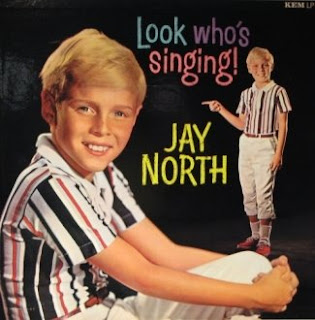
Jay North... When I Become A Man (.mp3 audio 02:37). From the album Look Who's Singing! (1959, Kem 27). From Probe is Turnin-on the People!
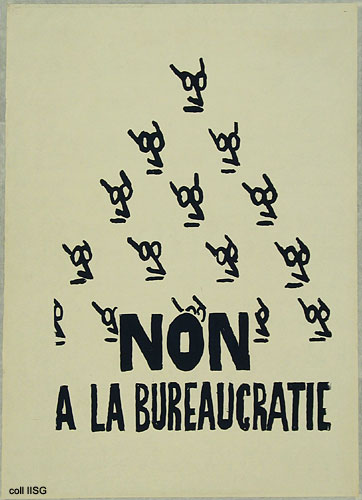
Non à la bureaucratie (Atelier Populaire, Paris, 78 x 59 cm). From A Dozen Posters from Paris May '68. "...The posters from the May '68 Paris student movement became immediate collectors' items. An explosion of creativity accompanied the rebellion of the students: new slogans ('Ce nest qu'un début'), new newspapers (l'Enragé), flyers and graffiti. Students from the Ecole des Beaux-Arts were the first to introduce completely democratic poster production. They occupied their own classrooms and renamed them 'Atelier Populaire' [Popular Studio]."
Daido Moriyama... Memory of Dog 3 (1982, Vintage gelatin silver, printed 1982, 10 x 12 inches). From the exhibition Daido Moriyama: The 80s, Vintage Prints at Steven Kasher Gallery in New York. "...The 1980s finds Moriyama at his most lyrical. With the extreme provocations of his 60s and 70s work behind him, he turns to a plainer, more centered investigation of everyday life. His camera and his printing (he makes all his prints himself) are voracious, hungry all the time. He seems to be intent on finding beauty and meaning in every scrap and horizon that the sun reveals to his eye. The vintage prints in this show have an immediacy and rawness not found in the modern prints that are usually on the market."
Jeannette Montgomery Barron... Cindy Sherman (New York, 1986, Gelatin silver print). From the exhibition Jeannette Montgomery Barron: Vintage Portraits From The 1980s at ClampArt.
Maureen 'Moe' Tucker... Heroin (.mp3 audio 08:48). From the album Playin' Possum (1981, Trash TLP 1001).
Joni Sternbach... 07.05.27 #4 Bettina & Toby (unique tintype. Ditch Plains). From Surfers by photographer Joni Sternbach. "...Working with a large-format camera and historic process (wet-plate collodion), I have concentrated on locations that are close to or directly on the water. At this juncture between land and sea, I explore subject matter in a constant state of transition. .
Tseng Kwong Chi... Pisa, Italy, 1989 (silver gelatin print, edition of 9). From the exhibition Tseng Kwong Chi: Self Portraits, 1979-1989 at Paul Kasim Gallery in New York. "...The son of exiled Chinese nationalists, Tseng Kwong Chi was part of an intimate circle of artists, Keith Haring, Kenny Scharf, and Cindy Sherman among them, who took the center stage of the New York art world during the nineteen-eighties. As a Hong-Kong born, Paris-trained artist, Tseng viewed himself as a citizen of the world and eschewed labeling himself or his art as 'Chinese.' However, his ironic self-portraits posed in a Mao suit in front of American landmarks found their way to Communist China and were profoundly influential for China's avant-garde, including conceptual artists Song Dong and Zhang Huan, who were exposed to Tseng's images through western magazines smuggled into the country in the 1980's. Tseng's photographs not only satirized relations between the United States and its emerging rival, China, but also broadcasted his freedom of movement - a privilege denied most Chinese artists at the time."